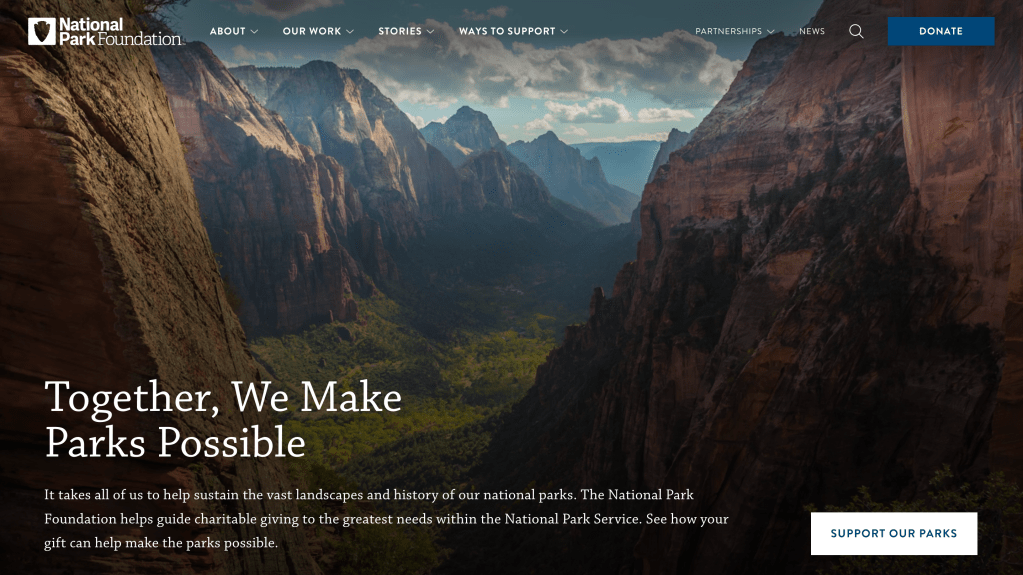
Content analysis is the key to making sure your website is as successful, accessible, and thoughtful as possible. No matter what, there is always something that can be done better to improve any area, which is why it’s so important to start analyzing.
There’s Software To Help You Get There
There are two major players when it comes to the software I’ve been using to complete my content analysis.
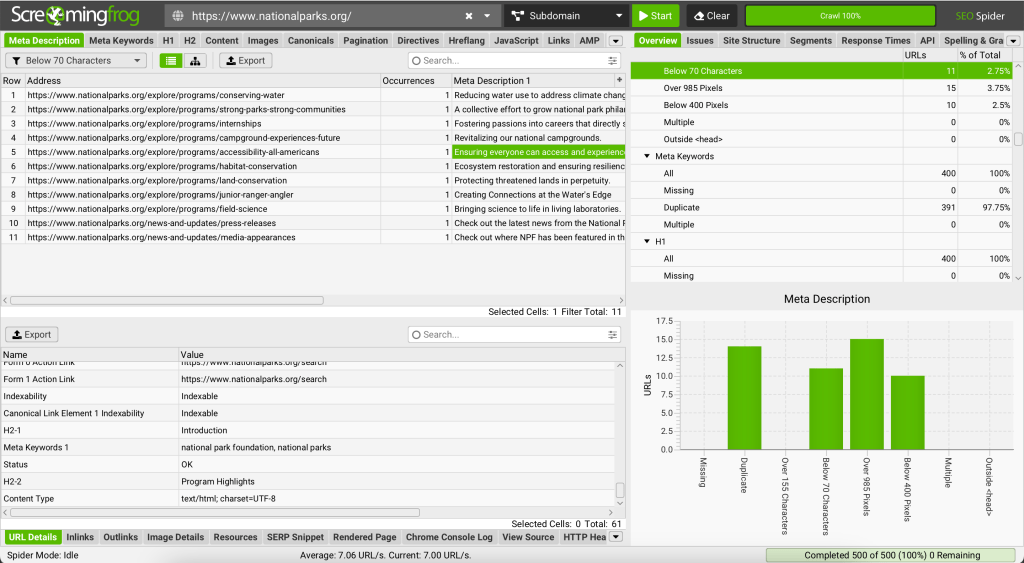
Screaming Frog SEO is a website crawler and SEO auditing tool that helps analyze the aspects of a website’s performance. By “crawling” through a website’s pages, it collects data on elements such as broken links, duplicate content, meta tags, photos, and other aspects. Screaming Frog is mainly used to identify and fix issues that can affect search engine optimization.
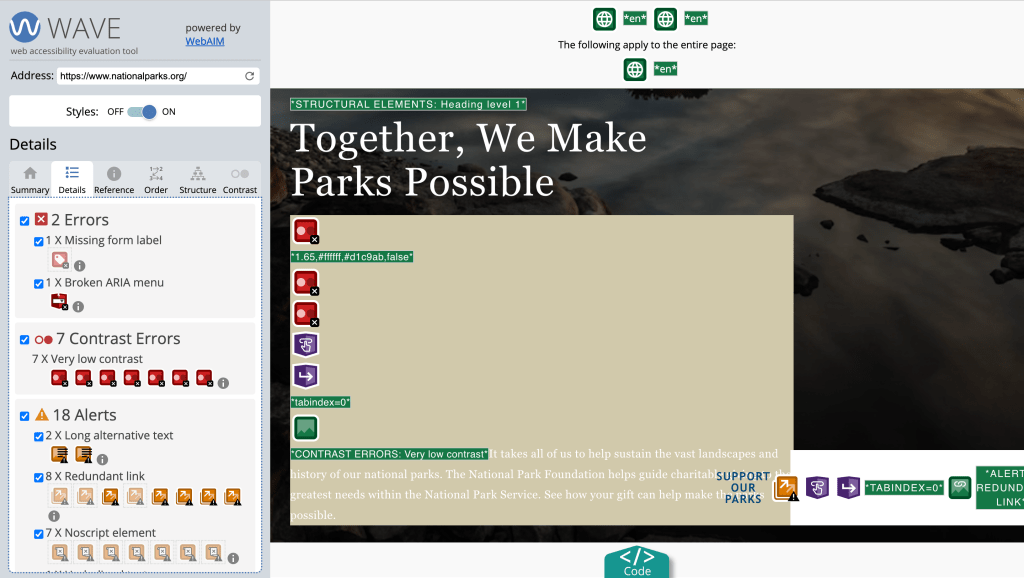
WAVE Web Accessibility Evaluation Tool is an online tool designed to help developers and designers review the accessibility of their websites. It highlights areas that may need some extra help. This goes for issues such as contrast and/or missing alt text for images. WAVE goes into the page and overlays icons and directly onto the spot with the issue so you can easily pinpoint the problems. WAVE is a great tool to utilize to make sure everything falls under accessibility guidelines and opens up your site to a wider audience.
For my own Content Analysis, I chose to a look at what the National Park Foundation (NPF) has been doing with their content. Through utilizing Screaming Frog, WAVE, and other strategies I have learned, I was able to put together a thorough analysis of all the information I found.
Highlights From My Analysis
Page Titles
The optimal page title length is between 55-70 character, however, NPF tends to stick around in the 40’s. In their 400 pages, their lowest count was 34 characters and their highest was 70 characters.
NPF uses a variety of descriptive page titles that give users the content they need to know where the link is headed (with no repeats, yay!)
Metadata
Through this analysis it was found that almost all of the pages had their own distinct meta descriptions and only have 14 instances of duplicate titles – all of which appeared in the news and updates section.
A good descriptive metadata falls within 125-155 characters which NPF sticks to most of the time with metadata such as “King Mountain Park remember the battle victory of the Revolutionary War – the first major America victory following the British invasion at Charleston.” With only a few instances of metadata lacking thorough description.
Heading Elements
The National Park Foundation does a great job a utilizing H1 & H2 elements on all of their pages. 100% of pages had both and were consistently written to draw people in.
For Example:
H1 – “together We Make Parks Possible.”
h2 – “Turning Passion for Our Parks into Action”
Alt Text and Contrast
Alt text and contrast both play use parts in ensuring your site is accessible. This is where WAVE came in to do a deep dive along Screaming Frog. I found that 18.42% of images on the NPF page did not have alt tags – and most of these empty tags belonged to logos and background images.
As for contrast, WAVE only flagged 7 instances of very low contrast which is a fairly low number. Meaning the rest of the site does a great job at emphasizing readability and accessibility for users.
Content
The National Park Foundation can be found across 5 other platforms in addition to their website. Across all 5 of these platforms, they are consistent in both content and activity – which has allowed them to set themselves up fro success.
Imagery & photos are also incredibly important in order to showcase their cause by highlighting photos that photos that emphasize scenery, educational experiences, and conservation efforts, they are able to connect more deeply with audiences and rally support.
Architecture
Is the page organized? Easy to understand? Responsive?
Yes, yes, and yes!
This site is set up so that everything is broken up into bite sized pieces that are easy to digest. That way readers aren’t overwhelmed by the amount of material in front of them.
Read My In Depth Analysis:
 Madison Vale
Leave a comment